The Illusion of Spread: When Your 'Diversified' Crypto Betting Portfolio Is Really Just One Big Bet

Photo: financial data correlation charts graphs investment portfolio analysis, via media.rs-online.com
Diversification is one of those concepts that sounds bulletproof in theory and falls apart spectacularly in practice. Crypto bettors hear it constantly — spread your positions, use different platforms, mix your asset classes. Good advice. Mostly. The problem is that during the exact moments you need diversification to work, it tends to stop working.
This phenomenon has a name in traditional finance: correlation creep. And in the crypto betting world, it's more dangerous than most people realize.
What Correlation Creep Actually Means
In calm market conditions, different assets genuinely do move independently. Your position on a prediction market outcome might have nothing to do with your DeFi yield farming play, which seems completely unrelated to your altcoin trading position. The correlations between them look low. Your spreadsheet says you're diversified. You feel good.
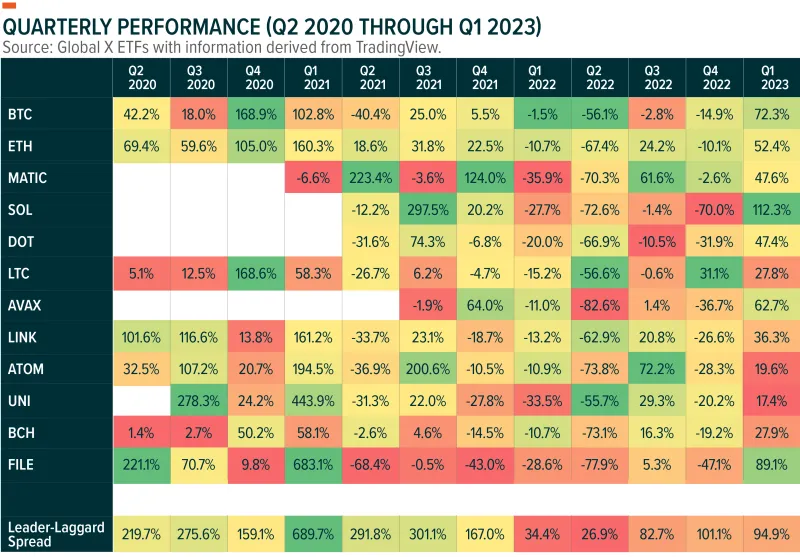
Then the market sneezes — a regulatory announcement, a major protocol exploit, a macro shock like a surprise Fed rate decision — and suddenly everything moves together. Your 'uncorrelated' positions all drop simultaneously. The diversification you built evaporates.
This happens because most crypto assets share a common underlying risk factor: sentiment toward the broader crypto ecosystem. When fear dominates, investors don't carefully distinguish between a DeFi governance token on one platform and a prediction market liquidity position on another. They sell everything that feels like 'crypto risk.' Your five positions aren't five separate bets — they're five expressions of the same bet.
Where Hidden Correlations Live in Crypto Betting
Let's get specific about where correlation creep hides in a typical crypto bettor's portfolio:
DeFi governance tokens across platforms: Holding governance tokens for three different decentralized betting protocols might feel like spreading your risk. But these tokens often move together because they're all sensitive to the same regulatory news, the same liquidity conditions, and the same overall DeFi market cycle. When DeFi is in favor, they all rise. When it's out of favor, they all fall.
Prediction market positions and underlying asset prices: If you're holding positions in prediction markets that involve crypto price outcomes — say, whether ETH will hit a certain level — those positions are directly correlated with ETH's price movement. That's obvious. Less obvious is that even non-price prediction markets (sports outcomes, political events) on crypto platforms tend to dip when the broader market tanks, because liquidity providers pull back and spreads widen.
Cross-chain 'diversification' that isn't: Moving positions from Ethereum to Solana to Avalanche feels like spreading across independent ecosystems. But during stress events, all major chains have historically sold off together. The chain-level diversification provides less protection than it appears.
Stablecoin yield plays during bank-run conditions: Even stablecoin positions — which feel like the safe harbor — can become correlated with risk-off events if the stablecoins themselves lose their peg or if the protocols generating yield face liquidity crunches simultaneously.
Measuring the Creep
The standard approach to measuring correlation is Pearson correlation coefficients — a number between -1 and 1 where 0 means no correlation and 1 means perfect lockstep movement. The issue is that most correlation calculations use full historical data, which includes calm periods that drag the average down and make everything look more independent than it really is.
A smarter approach is to calculate conditional correlations — specifically, what's the correlation between your positions during the worst 20% of market days? That's where your real risk lives, and that's the number that matters.
You don't need fancy software for this. Pull price data for your major positions, filter for the days when the overall crypto market dropped more than 5%, and see how your positions moved on those specific days. What you find will probably be uncomfortable.
Building Positions That Actually Stay Uncorrelated
Genuine diversification in crypto betting requires deliberately seeking out positions that have fundamentally different risk drivers — not just different tickers or different platforms.
Bet on outcomes with non-crypto drivers: Prediction markets that resolve based on real-world events — election outcomes, sports results, economic data releases — have risk profiles that don't inherently depend on crypto sentiment. A correctly priced political prediction market position doesn't care what Bitcoin is doing.
Incorporate volatility as a position: During high-correlation stress events, volatility spikes. Holding positions in volatility-sensitive instruments (options on crypto assets, for instance) can provide a natural hedge that pays off precisely when everything else is falling together.
Time diversification matters too: Staggering entry points across different market conditions rather than building all positions simultaneously reduces the risk that everything was entered at the same sentiment moment and will exit at the same moment too.
Liquidity tiers as a risk separator: Maintaining a meaningful chunk of your stack in highly liquid assets (major stablecoins, liquid majors) creates a buffer that doesn't move with the same correlation as illiquid DeFi positions. The liquidity difference itself creates genuine uncorrelation.
The Warning Signs You're Already Correlated
You don't have to wait for a crash to check your correlation exposure. Watch for these signals:
- Your portfolio moves more than 80% of the daily percentage change in Bitcoin or Ethereum, even though you don't hold either directly
- A single news headline — regulatory, macro, or protocol-related — consistently moves all your positions in the same direction
- More than half your positions are in governance tokens or yield-bearing assets on DeFi platforms
- You can't clearly articulate a scenario where Position A would gain value while Position B loses value
If several of these apply, you're not diversified. You're concentrated in crypto sentiment risk with extra steps.
The Bottom Line
Diversification is a process, not a destination. It requires ongoing monitoring of how your positions relate to each other — not just in calm conditions, but especially under stress. The crypto betting landscape on platforms like Bet8 Chain offers genuinely varied opportunities, but taking advantage of them means doing the analytical work to ensure your spread is real and not just cosmetic.
The goal isn't to hold a dozen different things. It's to hold positions where something going wrong for one doesn't automatically mean something going wrong for all of them. That distinction is the difference between a portfolio and a single leveraged bet wearing a costume.