False Safety: Why Your Crypto Betting Portfolio Probably Isn't as Diversified as You Think
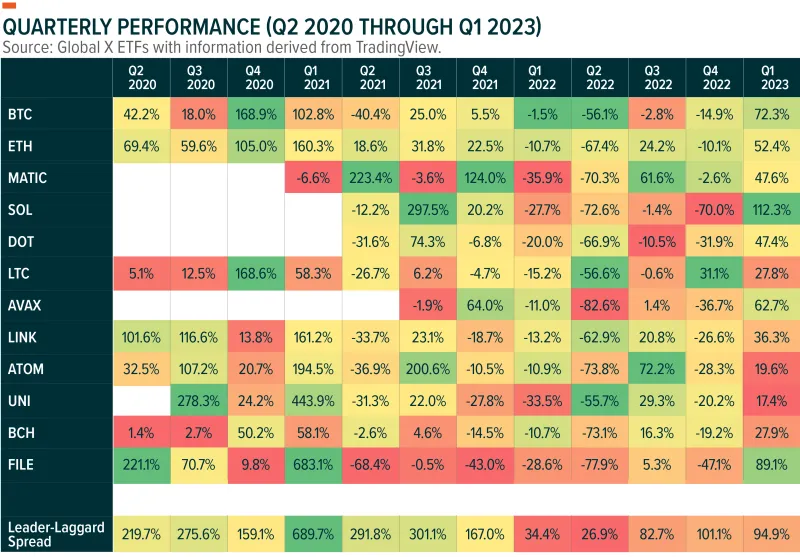
Photo: cryptocurrency portfolio diversification risk management charts, via assets-cms.globalxetfs.com
Diversification is one of the oldest rules in investing. Don't put all your eggs in one basket. Spread the risk. It's advice so intuitive that most crypto bettors apply it without much thought — splitting funds across Bitcoin, Ethereum, a few altcoins, maybe some DeFi tokens — and assume they've done their due diligence.
The problem? In crypto, that kind of surface-level diversification often provides a false sense of security. When markets get ugly, the baskets tend to fall together.
The Correlation Problem Nobody Warns You About
In traditional finance, diversification works because different asset classes respond differently to economic conditions. Bonds go up when stocks go down. Gold holds value during equity selloffs. The correlations between asset classes are genuinely low — sometimes negative — which means spreading across them actually reduces overall portfolio volatility.
Crypto doesn't play by those rules, at least not consistently. Under normal market conditions, Bitcoin, Ethereum, and most altcoins do exhibit somewhat independent behavior. That can lull bettors into thinking their multi-asset portfolio is well-hedged. But during stress events — a major exchange collapse, a regulatory crackdown, a macro risk-off moment — correlations across crypto assets spike toward 1.0 almost overnight.
What this means in plain terms: when things go bad, everything tends to go bad at the same time. The diversification you thought you had evaporates precisely when you need it most.
Reading a Correlation Matrix Without Falling Asleep
A correlation matrix is just a grid that shows how closely two assets move together, scored from -1 (perfectly opposite) to +1 (perfectly synchronized). For crypto bettors, the key insight isn't what the matrix looks like during calm periods — it's how it shifts under pressure.
Tools like CoinMetrics, Messari, and even some free resources on Dune Analytics let you pull rolling correlation data across major crypto assets. What you'll typically find is that BTC-ETH correlation hovers around 0.7 to 0.85 during normal conditions, but can push above 0.95 during sharp drawdowns. Altcoins, which might show 0.5 to 0.6 correlation to Bitcoin on a good day, often track BTC almost perfectly during sell-offs.
For your betting portfolio, this matters a lot. If your bankroll is spread across assets that all crater together when the market panics, you don't have diversification — you have concentration with extra steps.
Stress-Testing Your Own Setup
The best way to understand your actual exposure is to run a rough stress test on your current holdings. Pick three historical shock events — the May 2021 crash, the Terra/LUNA collapse in May 2022, and the FTX implosion in November 2022 are good benchmarks — and estimate what your portfolio would have done during each one.
Most bettors who do this exercise are unpleasantly surprised. A portfolio that looked balanced on paper often shows 40-60% drawdowns across the board during each event, because the assets weren't truly uncorrelated — they just appeared that way during quieter stretches.
Once you know your real exposure, you can start thinking about how to actually reduce it.
Where True Diversification Actually Lives
Real diversification in crypto requires going beyond just picking different tokens. Here are a few approaches worth considering:
Ecosystem diversification. Bitcoin, Ethereum, and Solana aren't just different assets — they represent different technical architectures, user bases, and risk profiles. An Ethereum-based DeFi token and a Solana-based prediction market token will often behave differently during ecosystem-specific stress events, even if they move together during macro shocks.
Venue diversification. For bettors specifically, spreading activity across multiple platform types — on-chain prediction markets, decentralized sportsbooks, and tokenized outcome markets — provides some protection against platform-specific risks like smart contract exploits or liquidity crunches.
Stablecoin positioning. Holding a meaningful portion of your bankroll in stablecoins isn't just idle cash management. It's genuine negative correlation during drawdowns, because stables hold value while everything else drops. More importantly, it preserves your ability to deploy capital when distressed assets are cheap.
Cross-chain exposure. Assets native to Layer 1 chains with distinct validator sets, governance structures, and user communities — think Cosmos ecosystem tokens versus Ethereum rollup tokens — tend to have lower long-run correlations than assets that all live on the same base layer.
Exploiting Genuine Divergences
Once you start seeing correlation patterns clearly, you can flip the script and look for moments when assets that usually move together diverge. These gaps are often temporary and tradeable.
For example, if ETH drops sharply following an Ethereum-specific event (a failed upgrade, a high-profile exploit) while Bitcoin holds steady, that divergence might represent a reversion opportunity. Similarly, when a specific blockchain's native token underperforms its ecosystem peers during a broad market rally, that gap frequently closes.
On prediction markets, these divergences sometimes show up as mispricings in relative performance bets — markets that let you wager on whether Asset A will outperform Asset B over a set time period. These instruments are inherently less sensitive to overall market direction and more sensitive to the specific factors driving each asset, which makes them a cleaner diversification vehicle than simply holding both.
Build Smarter, Not Just Broader
Diversification is still a valid strategy in crypto — it just requires more rigor than most bettors apply. The goal isn't to own more different things. It's to own things that genuinely behave differently when conditions deteriorate. Run the correlation data, stress-test your scenarios, and make sure the portfolio you think you have actually matches the one you're carrying into the next market shock.