Vote Early, Bet Smart: How DAO Governance Events Are Quietly Minting Crypto Betting Edges
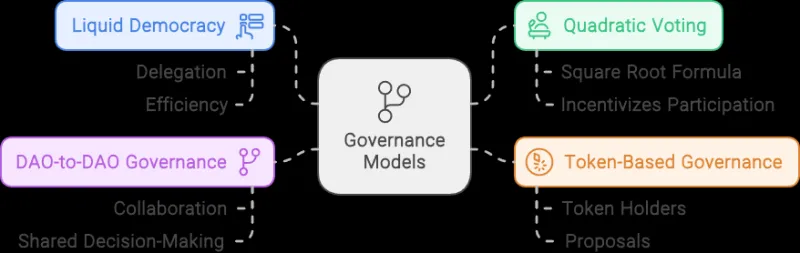
Photo: DAO governance voting blockchain protocol decision making, via analytickit.com
Every week, dozens of decentralized protocols put consequential decisions to a vote. Fee structures get revised. Treasury funds get allocated. Token emission schedules get modified. New chains get supported. And in nearly every case, the market reaction is predictable enough — if you know where to look and how to read the signals — to create genuine betting opportunities.
Governance is one of the most underutilized edges in crypto. Here's how to start using it.
Why Governance Moves Markets
At its core, a governance vote is a public announcement that something about a protocol is going to change. Change creates uncertainty, and uncertainty moves prices. But unlike random news events, governance votes follow a structured timeline. Proposals are submitted, discussion periods open, voting windows are announced in advance, and results are published on-chain. Every step is visible, dated, and trackable.
That predictability is the edge. When a major DeFi protocol announces a proposal to reduce token emissions — a move that would make the existing supply more scarce — informed bettors can position before the vote concludes. When a DAO votes to deploy treasury funds into a specific ecosystem, the downstream effects on related tokens are often foreseeable. The market doesn't always price these outcomes efficiently before they're finalized, which is where opportunity lives.
Building Your Governance Calendar
The first step is knowing what's coming. Governance activity is scattered across multiple platforms, but a few key resources make it manageable:
Tally.xyz aggregates on-chain governance proposals across dozens of major protocols in real time. You can filter by protocol, track voting progress, and see how token holder power is distributed — all without needing to visit each protocol's native forum.
Snapshot.org is where off-chain governance voting lives for many DeFi protocols. Proposals here don't execute automatically on-chain, but they signal community intent and often precede formal on-chain actions. Watching Snapshot for emerging consensus can give you a head start.
Protocol-specific forums and Discord channels are where the real early intelligence lives. Compound, Uniswap, Aave, and most major protocols maintain governance forums where proposals are debated before they go to a formal vote. If you're monitoring these channels, you're seeing the sausage get made — which means you're ahead of the people who only read the headline when the vote is announced.
Set aside 20 to 30 minutes a few times a week to scan these sources. Build a simple spreadsheet tracking upcoming votes, the nature of the proposal, the expected voting window, and the potential market impact. That calendar becomes your edge.
Understanding What Moves Prices (and What Doesn't)
Not every governance event is worth positioning around. Learning to filter signal from noise is essential.
Proposals most likely to generate meaningful price movement include: changes to token emission or buyback schedules (direct supply impact), decisions about treasury deployment into new ecosystems (capital flow signals), fee switch activations that redirect revenue to token holders (yield creation), and major protocol upgrades that affect security or scalability perceptions.
Proposals less likely to move the needle include: minor parameter adjustments, routine operational decisions, and proposals with overwhelming consensus that are already priced in by the time voting opens.
The sweet spot is a contested vote on a substantive issue where the outcome is genuinely uncertain. Those situations create the widest pricing gaps, because the market can't fully discount either outcome until the results are in.
Reading Voting Power and Incentive Structures
One of the most important — and most overlooked — factors in governance betting is understanding who actually controls the vote. Most DAO governance systems are token-weighted, meaning large holders have disproportionate influence. When a handful of whale wallets or venture funds hold enough tokens to swing a result, the outcome often isn't as uncertain as the discussion threads suggest.
Tools like Boardroom.info and Dune Analytics dashboards (search for governance-specific dashboards for major protocols) let you see how voting power is distributed and how major holders have voted in the past. If a proposal's top three supporters collectively control 40% of the vote and they're all aligned, the result is probably decided before most retail participants have even read the proposal.
That insider knowledge is genuinely valuable. If you can identify a proposal that looks contested on the surface but is actually controlled by a predictable coalition, you can position with more confidence than the general market.
Practical Positioning Strategies
Once you've identified a governance event worth playing, the question is how to structure your position. A few approaches work well depending on the situation:
Pre-vote accumulation. If you believe a proposal will pass and the market hasn't priced it in, accumulating the relevant token before the voting window closes is the simplest approach. The price discovery typically happens around announcement and again around result publication.
Prediction market positions. Several on-chain prediction markets allow direct wagering on governance outcomes — "Will Proposal X pass?" type markets. These offer cleaner exposure than holding the underlying token, since you're betting on the event itself rather than carrying all the price risk of the asset.
Ecosystem plays. Sometimes the most interesting opportunity isn't the protocol being voted on but an adjacent token that benefits from the outcome. A vote to expand a DeFi protocol to a new Layer 2 chain, for example, might be most profitably played through the L2's native token rather than the protocol's own governance token.
Staying Ahead of the Crowd
The governance edge works because most participants don't do this homework. They're focused on price charts and news headlines, not proposal forums and voting dashboards. That information gap is real and exploitable — but it shrinks as more people adopt this framework.
The bettors who build governance monitoring into their regular routine now are establishing habits that will compound over time. Every vote you track, every outcome you analyze, every prediction you test builds a mental model that gets sharper with use. In a market full of people reacting to what already happened, being the one who anticipated it is about as close to a structural edge as crypto betting gets.