Invisible Losses: How Ignoring Liquidity Depth Is Quietly Draining Your Crypto Betting Stack
You did everything right. You spotted a line you liked, confirmed the token price, hit confirm — and still walked away with less than you expected. No bad beat. No obvious mistake. Just a quiet, invisible leak that most crypto bettors never trace back to its source.
The culprit? Liquidity depth. Or rather, the lack of it.
This is one of the most underappreciated concepts in the decentralized betting space, and it's costing American crypto bettors real money every single day. Not in dramatic, headline-grabbing ways — but in slow, steady bleeds that compound over time and never show up cleanly on any win/loss ledger.
Let's fix that.
What Liquidity Depth Actually Means (And Why It's Not Just a Trading Term)
In traditional finance, liquidity refers to how easily you can buy or sell an asset without meaningfully moving its price. In crypto betting and decentralized prediction markets, the concept is identical — but the stakes feel a lot more personal when it's your wager on the line.
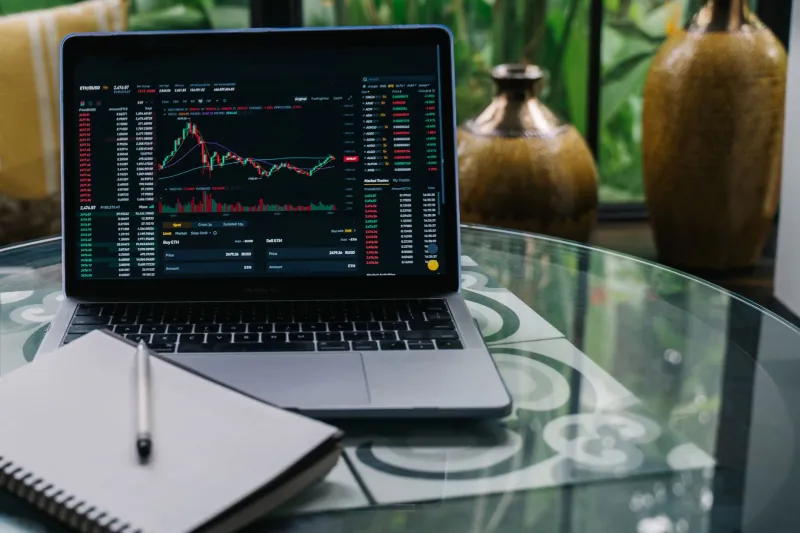
Liquidity depth specifically describes how much volume exists at various price levels in an order book or liquidity pool. A "deep" market has substantial buy and sell orders stacked across a wide price range. A "thin" market might show a great price at the top — but the moment your order hits, it chews through available liquidity and fills at a much worse number.
That gap between where you expected to transact and where you actually did? That's slippage. And on smaller decentralized sportsbooks and prediction markets, it's rampant.
The Slippage Problem on Decentralized Platforms
Centralized betting platforms and traditional sportsbooks carry their own frustrations, but one thing they tend to handle well is liquidity aggregation. There's a massive pool of action on both sides of most major bets, which keeps prices relatively stable.
Decentralized platforms are a different animal. Many run on automated market maker (AMM) models — the same mechanics powering DEXs like Uniswap. Instead of matching buyers and sellers directly, these platforms use liquidity pools funded by third-party providers. When you place a large wager, you're essentially swapping against that pool. The bigger your bet relative to the pool's size, the worse your effective price.
Here's a real-world scenario: say you want to wager $5,000 worth of ETH on a prediction market outcome. The displayed odds look great. But the pool only has $30,000 in total liquidity. Your single bet represents nearly 17% of the pool — and the AMM formula will automatically slide your fill price as you consume available liquidity. By the time your transaction confirms, you might be getting odds that are 3-5% worse than what you saw on screen.
That's not a platform glitch. That's math. And it's working against you every time you size up without checking depth first.
Reading an Order Book Like a Bettor, Not Just a Trader
Not every decentralized platform uses AMMs. Some operate with traditional order books, especially newer hybrid platforms built on faster Layer 2 chains. If you're using one of these, the order book is your best friend — if you know how to read it.
Here's a quick framework:
Check the spread first. The gap between the best available buy and sell price tells you immediately how competitive the market is. A tight spread signals healthy liquidity. A wide spread is a red flag that you're operating in thin territory.
Look at depth, not just the top of book. The best price shown is usually just the tip of the iceberg. Scroll down (or look at the depth chart if available) to see how quickly available volume drops off as you move away from the top price. If the book thins out fast, your larger orders are going to move the market against you.
Watch for walls. Large clusters of orders at specific price levels — sometimes called "walls" — can signal either strong support/resistance or deliberate manipulation. Either way, they affect how your order will fill.
Size your bet to the book. A good rule of thumb: keep your individual wager below 1-2% of visible liquidity on that side of the market. It's a conservative threshold, but it dramatically reduces slippage on any given transaction.
Liquidity Pool Metrics Worth Bookmarking
If you're betting on AMM-based prediction markets — platforms like Polymarket or similar on-chain venues — the order book isn't your tool. Instead, you need to get comfortable with a few key pool metrics.
Total Value Locked (TVL). This is the headline number. More TVL generally means deeper liquidity and less slippage risk for normal-sized wagers. Always check TVL before placing anything above a few hundred dollars.
Pool imbalance. AMM pools are designed to hold assets in a target ratio (often 50/50). When one side of a prediction market gets heavily bet, the pool drifts out of balance, and prices shift accordingly. A heavily imbalanced pool means the market has already priced in significant sentiment — and your fill will reflect that.
Slippage estimators. Many DEX interfaces and some prediction markets now show estimated slippage before you confirm a transaction. Don't ignore this number. If the platform shows you 2%+ slippage on a bet, that's effectively a hidden vig on top of whatever edge you thought you had.
The Silent Ledger Problem
Here's what makes liquidity-related losses so insidious: they don't register as losses in the traditional sense. Your bet still goes through. The outcome still resolves. But because you filled at worse odds than intended, your effective return is lower than your win/loss record suggests.
Imagine you consistently get 2% slippage on every significant wager you place. Over 50 bets at $1,000 each, that's $1,000 in invisible losses — money that quietly evaporated before the games even started. No bad beats required.
This is why serious crypto bettors treat execution quality as a performance metric, not just an afterthought. Your edge at the research stage can be completely neutralized by sloppy execution at the transaction stage.
Practical Steps to Stop Getting Burned
So what do you actually do about all this? A few habits that separate disciplined bettors from the rest:
- Always check TVL and pool depth before sizing up. Make it a pre-bet ritual, the same way you'd check injury reports before a game.
- Use limit orders when available. On platforms that support them, limit orders let you set the maximum price you're willing to accept, protecting you from unexpected slippage.
- Break large positions into smaller chunks. If you want to put $10,000 into a position on a thin market, consider splitting it into multiple smaller transactions over time. You'll get better average fills.
- Compare platforms before committing. Liquidity varies dramatically across decentralized betting venues. The same market on two different platforms might have wildly different depth — and wildly different effective prices for your wager.
- Factor slippage into your edge calculation. If you think you have a 3% edge on a bet but you're taking 2% slippage, your real edge is 1%. That math matters.
The Bottom Line
The crypto betting space rewards bettors who think like traders — and traders who understand that execution is half the game. Liquidity depth isn't some abstract concept for quants and DeFi developers. It's the difference between getting the price you saw and getting the price the market decided to give you.
At Bet8 Chain, we're all about wagering smarter and trading bolder. That means looking beyond the surface numbers and understanding the mechanics that actually determine your outcome. Start reading liquidity before you read the odds, and you'll immediately start making better decisions — even before a single result comes in.