Big Wallets Don't Lie: How to Read On-Chain Whale Movements Before the Price Catches Up
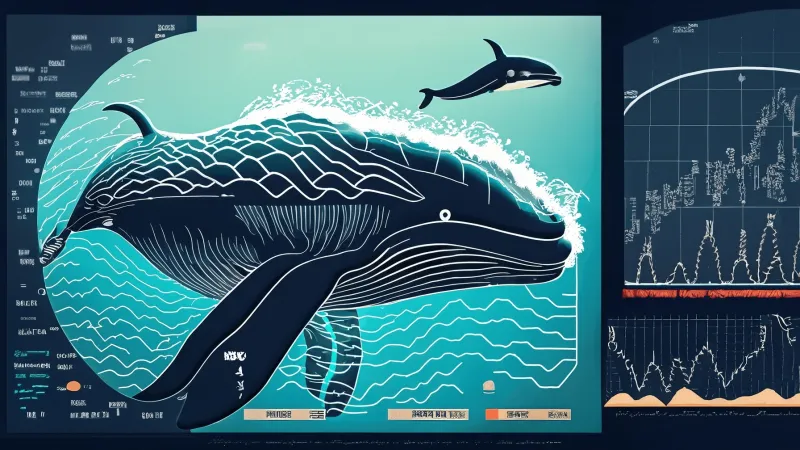
Photo: cryptocurrency blockchain whale large wallet data analytics screen, via public.bnbstatic.com
There's a version of crypto where price charts are the whole story. Most people live there. They watch candlesticks, follow RSI, and wonder why they keep getting caught on the wrong side of major moves. Then there's a smaller group of traders and bettors who've figured out something important: the blockchain itself is a live feed of intent, and the biggest players in the market are broadcasting their next move in real time.
You just have to know how to read it.
Why Whale Wallets Are the Market's Most Honest Signal
In traditional finance, institutional positioning is buried inside quarterly filings and 13F reports that land weeks after the fact. In crypto, every single transaction is logged on a public ledger the moment it happens. That includes the moves made by addresses holding tens of millions of dollars in digital assets.
These large holders—commonly called whales—can't hide their footprints. When a wallet sitting on 50,000 ETH starts shuffling funds toward an exchange, that's not random housekeeping. When a dormant Bitcoin address that's been cold for two years suddenly wakes up, something changed in the calculus of whoever controls it. These aren't noise. They're signals.
The edge here is simple: whale behavior tends to precede price action, not follow it. By the time a move shows up on a price chart, the big money has already positioned. Your job is to catch the setup before the chart confirms it.
The Tools You Actually Need
You don't need proprietary software or a Bloomberg terminal to get started. A handful of free and freemium platforms give you solid visibility into on-chain whale activity:
Etherscan and Blockchain.com are the raw explorers. They're not pretty, but they're comprehensive. You can search any wallet address, pull its full transaction history, and start identifying behavioral patterns.
Whale Alert tracks large transfers across major blockchains in real time and broadcasts them to Twitter and Telegram. It's a good passive feed for catching big moves as they happen.
Nansen and Glassnode are the heavy hitters. Both platforms layer analytics on top of raw on-chain data, tagging wallets by type (exchange, DeFi protocol, known fund, etc.) and tracking aggregate flows. Glassnode's free tier gives you enough to work with. Nansen's wallet labels are genuinely valuable if you want to level up.
DeBank is underrated for DeFi-specific whale watching. It shows you the full portfolio of any wallet address, including staked positions, LP exposure, and pending claims.
Accumulation vs. Distribution: The Two Patterns That Matter Most
Once you're watching wallets, you need a framework for what you're actually looking at. The two most important behavioral patterns are accumulation and distribution, and they look pretty different once you train your eye.
Accumulation is what it sounds like: a large address—or a cluster of large addresses—steadily adding to a position over time. This often happens quietly, through smaller transactions spread across days or weeks rather than one massive buy. Whales don't want to move the market against themselves. They're patient. What you'll see on-chain is consistent inflows to a cold wallet or a DeFi staking position, combined with tokens leaving exchanges and moving into self-custody. That last part matters—tokens leaving exchanges reduce available supply and tend to be a bullish leading indicator.
Distribution is the opposite. Tokens moving toward exchanges is the classic tell. When a large holder starts routing assets to Coinbase, Binance, or Kraken, they're setting up to sell. Combined with reduced staking activity or LP withdrawals, it paints a pretty clear picture of someone lightening up ahead of a price move.
Neither signal is a guarantee. But as part of a broader read on market conditions, they're a lot more informative than waiting for a moving average crossover.
Timing Your Bets Around Whale Behavior
Here's where this gets practical for the betting side. If you're using a decentralized prediction market or a crypto-native sportsbook that settles in tokens, the underlying asset price matters a lot. A bet that looks profitable at current prices can look very different if the token dumps 20% before settlement.
When you see distribution signals in a token you're holding exposure to—either directly or through a bet—that's a reason to reassess your time horizon. You don't necessarily need to exit, but you should be asking whether your position can survive a whale-driven sell-off.
Conversely, accumulation patterns in a token you're considering for a longer-term bet add a layer of conviction to the thesis. If the on-chain data shows large wallets building positions while sentiment on Twitter is still bearish, that divergence is interesting. It suggests the narrative hasn't caught up to what the smart money is actually doing.
The Exchange Flow Shortcut
If full wallet analysis feels like too much to start with, there's a simpler version: just watch exchange flows at the aggregate level. Glassnode tracks net exchange inflows and outflows for Bitcoin and Ethereum going back years. When net outflows are consistently high—meaning more tokens are leaving exchanges than arriving—it tends to correlate with price strength over the medium term. When inflows spike, distribution pressure is rising.
This doesn't tell you when exactly a move happens, but it tells you which direction the wind is blowing. Pair it with basic price context and you've got a cleaner framework than most retail participants are working with.
Don't Overcomplicate It
The trap a lot of people fall into is treating on-chain data like a magic oracle. It isn't. Whales are wrong sometimes. Large wallets move for reasons that have nothing to do with price expectations—tax events, OTC deals, protocol migrations. A transfer to an exchange doesn't always mean an imminent dump.
What on-chain data gives you is context. It narrows the range of likely scenarios. It helps you ask better questions. And when multiple signals line up—exchange outflows rising, large wallets accumulating, dormant addresses staying quiet—the weight of evidence starts to mean something.
Most casual bettors in the crypto space are flying blind, reacting to price charts and Twitter takes after the move has already started. The blockchain is right there, open to everyone, broadcasting in real time. The only question is whether you're paying attention.
Start watching. The whales are already talking.